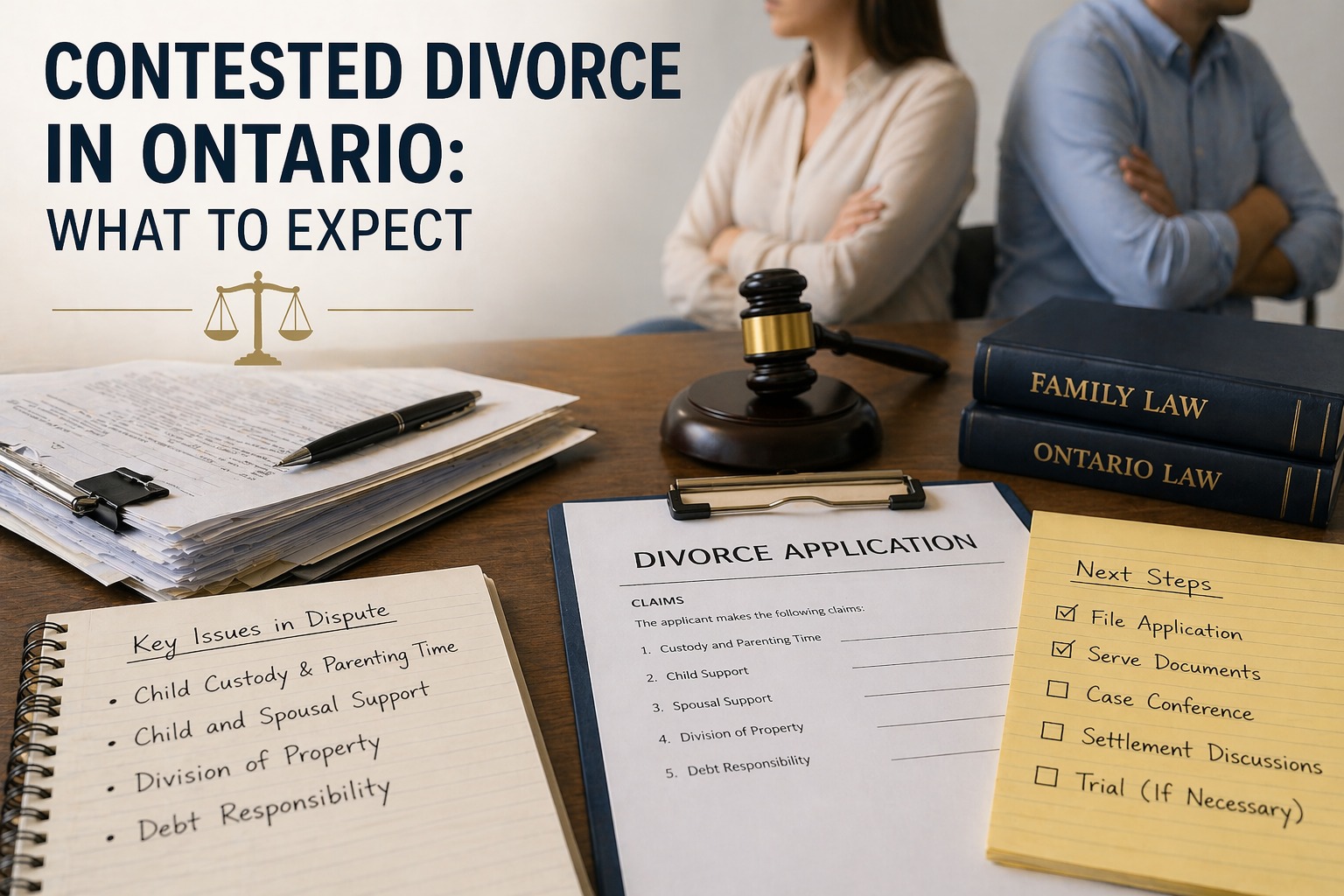
Not every divorce is straightforward.
While some couples are able to agree on the terms of their separation, others find themselves in situations where key issues simply can’t be resolved between them.
That’s where a contested divorce comes in.
If you’re dealing with disagreements around finances, children, or property, it’s important to understand what the process actually looks like — and what to expect moving forward.
What Is a Contested Divorce?
A contested divorce happens when spouses cannot agree on one or more issues related to the separation.
This can include:
- Child custody and parenting time
- Child or spousal support
- Division of assets and property
- Responsibility for debts
Instead of simply filing paperwork and waiting for approval, these cases involve court processes and legal arguments.
How It Differs from an Uncontested Divorce
In an uncontested divorce:
- Both parties agree
- The process is largely administrative
- Timelines are shorter
In a contested divorce:
- Disagreements must be resolved
- The court may be involved at multiple stages
- The process is longer and more complex
This distinction has a major impact on both timeline and cost.
The Contested Divorce Process in Ontario
While every case is different, most contested divorces follow a general structure.
1. Filing the Application
One spouse initiates the process by filing a divorce application outlining their claims.
2. Response from the Other Party
The other spouse has an opportunity to respond and present their own position.
3. Case Conferences
These are early court meetings aimed at:
- Identifying issues
- Encouraging settlement
- Narrowing disagreements
4. Motions and Interim Orders
If urgent issues arise (for example, temporary support), the court may issue interim decisions.
5. Settlement Discussions
Even in contested cases, many matters are resolved before trial through negotiation.
6. Trial (If Necessary)
If no agreement is reached, the case proceeds to trial, where a judge makes the final decision.
How Long Does a Contested Divorce Take?
This is one of the most common questions — and the honest answer is: it depends.
Factors include:
- Complexity of the issues
- Level of cooperation between parties
- Court availability
- Whether the case goes to trial
Some cases resolve within months, while others can take significantly longer.
Costs Involved in a Contested Divorce
Contested divorces are generally more expensive than uncontested ones.
Costs can increase due to:
- Multiple court appearances
- Ongoing legal work
- Expert involvement (financial, parenting assessments)
That said, every case is different, and outcomes often depend on how efficiently the matter is handled.
Common Challenges in Contested Divorces
There are a few patterns that tend to come up:
- Emotional stress and communication breakdown
- Delays caused by incomplete disclosure
- Escalation of relatively small disagreements
- Uncertainty around outcomes
These factors can make the process feel unpredictable.
Is Court Always Necessary?
Not always.
Even in contested situations, many cases are resolved through:
- Negotiation
- Mediation
- Settlement conferences
Court is often a last resort — not the starting point.
When Legal Guidance Becomes Critical
Contested divorces involve more than just paperwork — they require strategy.
Legal support becomes especially important when:
- There are children involved
- Financial stakes are significant
- One party is more experienced or represented
- The situation involves cross-border issues
For example, if part of the marriage or divorce relates to another country, additional legal steps may be required, including foreign divorce recognition.
👉 https://abalaw.ca/practice-area/foreign-divorce-opinion/
How ABALAW Approaches Contested Divorce Cases
Every case is different, and there’s no one-size-fits-all approach.
What matters is:
- Understanding the full picture early
- Focusing on practical outcomes
- Avoiding unnecessary escalation where possible
In many situations, the goal is not just to “win,” but to resolve things in a way that allows both parties to move forward.
Final Thoughts
Contested divorce is more complex than most people expect — not just legally, but emotionally and financially.
Knowing what to expect can make a significant difference in how you approach the process.
If you’re currently dealing with disagreements or unsure how things may unfold, getting clarity early can help you make better decisions.
Need Help Navigating a Contested Divorce?
If you want to understand your position and options clearly, speaking with someone experienced in Ontario family law can help.
👉 https://abalaw.ca/divorce-lawyer-ontario/